

close
Choose Your Site
Global
Social Media

Views: 0 Author: Site Editor Publish Time: 2026-11-06 Origin: Site


A microscopic fluid error can ruin an entire production batch. In modern manufacturing—pharmaceuticals, electronics, and battery production—precision fluid delivery is the absolute backbone of product viability. Even a fractional deviation in volume leads to catastrophic financial losses. Regulatory compliance fails. Critical product defects emerge.
Traditional metal or engineered plastic pumps often fail under continuous industrial stress. They wear out rapidly. They suffer from unpredictable thermal expansion and fall victim to chemical corrosion. Ultimately, these physical vulnerabilities destroy dispensing accuracy. This triggers costly, unplanned downtime on the factory floor.
To resolve these specific bottlenecks, engineers are turning to advanced technical ceramics. We will explore exactly what this technology entails. You will see how it outperforms traditional stainless steel alternatives and guarantees unmatched volumetric precision.
Extreme Hardness and Durability: Advanced ceramic materials offer exceptional wear resistance, ensuring long-term volumetric accuracy without the physical degradation commonly seen in metal alternatives.
Zero Fluid Contamination: The inherent chemical inertness of ceramic components prevents cross-contamination and metal ion leaching, making them an optimal choice for medical, pharmaceutical, and chemical applications.
Consistent Thermal Stability: A remarkably low coefficient of thermal expansion ensures that operational temperature fluctuations do not alter the internal dispense volume.
Optimized Total Cost of Ownership: Upgrading to precision ceramic technology significantly reduces maintenance requirements, minimizes production downtime, and lowers long-term operational costs compared to traditional stainless steel systems.
Precision is an absolute requirement in modern fluid control systems. A Ceramic Plunger Dispensing Pump is a highly specialized positive displacement device. It delivers exact volumes of liquid. Standard industrial pumps rely on stainless steel or engineered plastics. In contrast, the core wetted components of this pump are manufactured from advanced technical ceramics. This includes the reciprocating plunger and the internal cylinder sleeve. Materials typically feature high-purity Alumina or Zirconia. By utilizing these advanced materials, engineers achieve manufacturing tolerances impossible to maintain with standard metals.
The mechanics rely on positive displacement. A motor drives a mechanical linkage. This converts rotary motion into precise linear movement. The ceramic plunger retracts within the ceramic sleeve. A localized vacuum draws a specific volume of fluid into the pump chamber. The plunger then moves forward. It generates high pressure to expel the fluid through the outlet valve.
The clearance between the plunger and sleeve is machined to microscopic tolerances—often just 1 to 3 microns. This phenomenally tight clearance acts as a mechanical seal. The system draws and pushes fluids with exact volumetric control. It repeats this cycle after cycle. Deformable rubber seals are completely eliminated.
To truly understand the engineering advantage, we must compare advanced ceramics directly against standard 316L stainless steel. Metal remains the most common material used in traditional fluid delivery systems. While metal is undeniably easier to machine, it falls drastically short in continuous high-cycle precision applications.
Engineering Parameter | Stainless Steel Plunger | Technical Ceramic Plunger |
|---|---|---|
Material Hardness | Moderate Mohs 5 to 6 | Extremely High Mohs 8.5 to 9 |
Wear Resistance | Susceptible to scratching and scoring | Highly resistant to physical wear |
Thermal Expansion | High expands significantly with heat | Very Low maintains dimensional stability |
Chemical Resistance | Vulnerable to strong acids and chlorides | Highly inert to most aggressive chemicals |
Dynamic Seals | Requires O-rings or elastomeric seals | Operates seal-less due to tight tolerances |
Typical Lifespan | Requires frequent maintenance | Operates for millions of cycles consistently |
Metal components inevitably scratch and wear down under continuous friction. Ceramic maintains its factory-level tolerance for millions of cycles. This ensures the dispensing volume remains mathematically consistent.
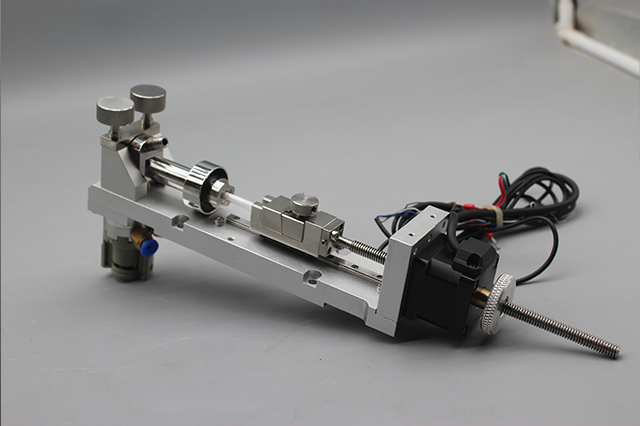
Mechanical wear degrades fluid delivery precision over time. Imagine a high-speed filling line. It processes thousands of diagnostic vials per hour. Continuous friction between the moving plunger and the stationary cylinder physically removes microscopic layers of material in a traditional pump. Material hardness becomes critical here. Standard stainless steel ranks around 5.5 on the Mohs scale. Technical ceramics like Alumina and Zirconia rank between 8.5 and 9. They are second only to diamonds in sheer hardness.
This extreme hardness directly impacts dispensing precision. Metal plungers scratch and score, especially if the fluid contains microscopic particulates. Micro-scratches increase the internal clearance. Fluid slips backward during the pressure stroke. Engineers call this blowby. The pump delivers slightly less fluid than intended. Batch consistency is ruined.
Technical ceramics resist scratching and scoring. The physical dimensions of the plunger remain static. The pump delivers the exact same micro-liter volume on cycle one as it does on cycle one million.
Advanced manufacturing processes frequently utilize harsh solvents, concentrated acids, or highly alkaline solutions. These aggressive fluids initiate chemical reactions when processed through traditional metal pumps. The stainless steel components gradually dissolve. This destroys the internal geometry. It also introduces a severe risk of fluid contamination.
Advanced Ceramic Plunger Dispensing Pumps offer a definitive solution. Their chemical inertness is exceptional. Technical ceramics do not react chemically with most industrial fluids. They are impervious to oxidation and galvanic corrosion. Absolutely zero leaching of metal ions occurs in the fluid stream.
This characteristic is a fundamental requirement for the pharmaceutical and biotechnology industries. Fluid purity is strictly regulated. Even parts-per-billion levels of metal contamination can ruin a batch of active pharmaceutical ingredients. By utilizing ceramic components, manufacturers guarantee the fluid exiting the pump is chemically identical to the fluid entering it.
High-speed automated manufacturing requires pumps to cycle hundreds of times per minute. Rapid mechanical motion generates significant kinetic friction. This friction converts into heat. Thermal expansion is the inherent problem with heat in precision engineering.
Metals possess a relatively high coefficient of thermal expansion. A stainless steel pump physically expands as it operates and heats up. This alters the internal geometry and volumetric capacity. A metal pump calibrated perfectly at room temperature will dispense different fluid volumes once it reaches operating temperature. Dispensing errors become unacceptable.
In contrast, ceramic materials possess an extremely low coefficient of thermal expansion. Their dense crystalline structure remains dimensionally stable under significant thermal stress. The physical dimensions of the ceramic plunger and sleeve remain static. Tight clearances are maintained. Uninterrupted volumetric accuracy is guaranteed regardless of temperature fluctuations.
Dispensing clean, low-viscosity fluids is relatively simple. The true test occurs when handling high-viscosity materials or fluids containing solid abrasive particles. The global manufacturing landscape is currently experiencing a massive shift toward electric vehicle battery production and advanced semiconductor packaging. These booming sectors heavily rely on dispensing highly abrasive lithium slurries, conductive pastes, and viscous thermal adhesives. Consequently, the demand for robust fluid handling systems has skyrocketed. Traditional metal pumps simply cannot survive the liquid sandpaper effect of these modern industrial fluids.
The tough, highly dense nature of ceramic components easily withstands these abrasive slurries. The ceramic is harder than the suspended abrasive particles. The particles cannot scratch the plunger surface. The pump maintains structural integrity and volumetric accuracy. Integrating a Ceramic Plunger Dispensing Pump becomes a critical operational upgrade for facilities handling these materials.
Furthermore, dispensing high-viscosity fluids requires significant mechanical pressure. The rigid structure and high compressive strength of ceramic pumps allow them to generate and sustain this high pressure. They push thick fluids precisely without mechanical deflection.
Precision fluid delivery in the micro-liter and nano-liter ranges requires flawlessly smooth internal pump surfaces. High-grade technical ceramics are engineered through advanced sintering processes. They have virtually zero porosity. These components are meticulously lapped and polished to achieve a mirror-like surface finish. The roughness average is often less than 0.1 microns.
This ultra-smooth finish provides a critical engineering advantage. The pump operates without dynamic elastomeric seals. The fit between the plunger and cylinder is phenomenally tight—often maintaining a clearance of just 1 to 3 microns. Many ceramic systems operate entirely seal-less.
Eliminating rubber O-rings removes multiple variables from the dispensing equation. Seals introduce unpredictable friction known as the stick-slip phenomenon. They degrade over time. They shed microscopic rubber particles into the fluid stream. Removing seals entirely eliminates the risk of degradation and friction variation. This seal-less mechanical architecture allows for ultra-precise micro-dispensing. Manufacturers can control fluid application down to 0.1 microliters with a Coefficient of Variation below 0.5 percent.
Procurement teams must look beyond the initial purchase price. Calculating the Total Cost of Ownership is essential. Standard metal pumps may have a lower initial capital expenditure. However, their long-term operational expenditure is exceptionally high. Frequent maintenance, replacement parts, and constant recalibration drive up costs.
Ceramic parts do not wear out quickly. Production lines do not need frequent stops for pump maintenance. An hour of unexpected downtime in a high-volume facility costs thousands of dollars in lost productivity. Ceramic systems drastically increase the Mean Time Between Failures. Production lines run continuously for months or years without manual intervention.
The long-term return on investment of a ceramic system is vastly superior. Uninterrupted production, zero maintenance costs, and the elimination of replacement seal inventory make ceramic technology highly cost-effective.
The fundamental advantages of ceramic pumps are universally beneficial. However, specific applications vary significantly across manufacturing sectors. Selecting the optimal pump requires understanding your unique fluid handling challenges.
Fluid delivery here is about patient safety and absolute purity. Facilities must select pumps compatible with Clean-in-Place and Sterilize-in-Place protocols. Look for high-purity Alumina components. The chemical inertness ensures aggressive sterilization chemicals will not degrade the pump. The zero-porosity surface prevents bacterial adhesion. This ensures compliance with strict FDA regulations.
The challenges shift toward handling abrasive and highly viscous materials. Battery manufacturing requires precise dispensing of lithium slurries. Semiconductor packaging relies on micro-dispensing thermal adhesives. Extreme hardness and wear resistance are non-negotiable. Specify Zirconia ceramic plungers for maximum fracture toughness when handling high-viscosity pastes. This prevents equipment failure and avoids catastrophic metal contamination in battery cells.
Advanced ceramic pumps have fundamentally redefined the standards of precision fluid delivery. They provide extreme wear resistance, exceptional chemical inertness, and superior thermal stability. They solve the exact pain points that cause traditional metal pumps to fail. Their ability to handle highly abrasive materials and execute flawless micro-dispensing makes them an invaluable asset.
Upgrading to ceramic technology is a necessity for manufacturing facilities aiming for zero-defect production. We highly encourage production managers to evaluate their current fluid delivery systems. Consult with engineering experts to integrate a high-performance Ceramic Plunger Dispensing Pump into your automated workflows today. Visit HR Fluids to explore custom-engineered solutions tailored to your specific production requirements.
The operational lifespan of a ceramic plunger pump vastly exceeds traditional metal alternatives. They often last five to ten times longer. A standard stainless steel pump requires seal replacement or complete plunger replacement after several hundred thousand cycles due to friction and scoring. A well-maintained ceramic pump routinely operates for millions of cycles without measurable degradation. In automated manufacturing environments, they run continuously for five to ten years with minimal preventative maintenance.
Yes. Exceptional chemical resistance is a defining characteristic of technical ceramics. Materials such as high-purity Alumina and Zirconia are highly inert. They do not react with, absorb, or degrade when exposed to aggressive chemical compounds. Engineers routinely use them to dispense highly corrosive fluids including concentrated acids, strong alkalis, and volatile organic solvents without any risk of corrosion or metal ion leaching.
The superiority comes down to four critical engineering advantages. These include superior hardness, zero thermal expansion, no metal leaching, and the ability to operate without dynamic seals. Ceramics do not scratch when pumping abrasive fluids. They remain dimensionally stable under heat. They prevent chemical contamination. They can be polished to such a smooth finish that elastomeric O-rings are no longer needed. This eliminates a major source of maintenance downtime.
Any industry requiring high precision, strict hygiene, or the processing of difficult fluids stands to benefit immensely. Prominent sectors include Pharmaceuticals and Biotechnology for zero contamination and precise micro-dosing. Lithium-ion Battery Manufacturing relies on them for handling abrasive slurries without metal contamination. Semiconductor and Electronics production utilizes them for viscous adhesives. Cosmetics and Food Beverage manufacturing also heavily depend on this technology.
Ceramic plunger pumps are exceptionally accurate. Because the clearance between the plunger and cylinder is machined to a mere 1 to 3 microns, fluid slip is virtually eliminated. This allows the pump to dispense volumes as low as 0.1 microliters with a Coefficient of Variation below 0.5 percent. This level of repeatability is critical for medical diagnostics and semiconductor packaging.
No. One of the greatest advantages of a precision ceramic pump is that it operates without external lubrication. The ultra-smooth surface finish and the inherent properties of the ceramic material create a very low friction coefficient. The fluid being pumped typically acts as the only necessary lubricating film. This seal-less and lube-free design guarantees that no foreign oils or greases contaminate your production fluid.


