

close
Choose Your Site
Global
Social Media

Views: 0 Author: Site Editor Publish Time: 2026-11-06 Origin: Site


Do you struggle with fluid contamination in precise industrial processes? Corrosive liquids often destroy standard equipment quickly. This causes costly downtime and ruins product purity. Modern industrial fluid control demands components that refuse to degrade, deform, or react with the pumped medium. Standard plastic or metal components simply cannot survive these harsh realities.
In this comprehensive guide, we will explore how advanced material science solves these persistent challenges. By examining the underlying mechanics, essential components, and modern automation techniques, engineers and procurement managers can make highly informed purchasing decisions. Specifically, integrating a Micro Ceramic Metering Pump into your workflow offers a specialized, robust solution engineered for rigorous micro-dispensing and dosing.
Precision Engineering: Utilizing technical ceramics like high-purity alumina or zirconia provides unmatched wear resistance and chemical inertness compared to traditional metal alternatives.
Valveless Architecture: A unique rotating and reciprocating piston mechanism entirely eliminates check-valve clogging. This ensures highly repeatable, uninterrupted dosing.
Intelligent Control: Modern fluid systems integrate high-resolution stepper motors and Programmable Logic Controllers for exact volume displacement down to the microliter level.
Reduced Maintenance: The extreme hardness of internal components drastically lowers maintenance intervals and unexpected downtime.
Versatile Deployment: These units serve as the optimal choice for high-stakes sectors like pharmaceutical manufacturing, lithium-ion battery production, and precise chemical processing.
To truly grasp the value of these dosing systems, we must first examine the underlying material science. Standard fluid transfer equipment often falls short when exposed to abrasive slurries or strong acids. Material selection is the critical first step in system design.
Industrial ceramics used in pump manufacturing are vastly different from standard household materials. The most common materials deployed are Alumina Oxide and Zirconia. Alumina boasts a rating of 9 on the Mohs hardness scale, rendering it nearly as hard as diamond. Zirconia offers slightly lower hardness but provides exceptional fracture toughness. This makes it highly resistant to mechanical shocks on the factory floor.
When these raw materials are sintered and machined using diamond grinding tools, they achieve surface finishes with clearances measured in single-digit microns. This extreme hardness prevents abrasive wear from particulate-laden fluids. Picture a facility processing aggressive chlorides. Unlike stainless steel, which easily oxidizes under such stress, technical ceramics remain completely inert. This chemical stability guarantees zero fluid contamination.
It is critical to distinguish between bulk fluid transfer and precise metering. A standard centrifugal pump moves massive volumes of liquid. Its output flow rate fluctuates wildly based on system backpressure and fluid viscosity. In stark contrast, a metering pump operates as a controlled volume device. It delivers an exact, predetermined volume of fluid per cycle regardless of external pressure variations.
To illustrate the stark differences, consider the following engineering comparison:
Feature | Standard Diaphragm / Centrifugal Pumps | Ceramic Metering Pumps |
|---|---|---|
Flow Accuracy (Cv) | Typically 2% to 5% variance | Less than 0.5% variance |
Valve Architecture | Relies on mechanical check valves | 100% Valveless design |
Wear Resistance | Membranes stretch and degrade over time | Diamond-like hardness with zero deformation |
Maintenance Frequency | High; requires frequent valve and seal replacement | Extremely low; components last millions of cycles |
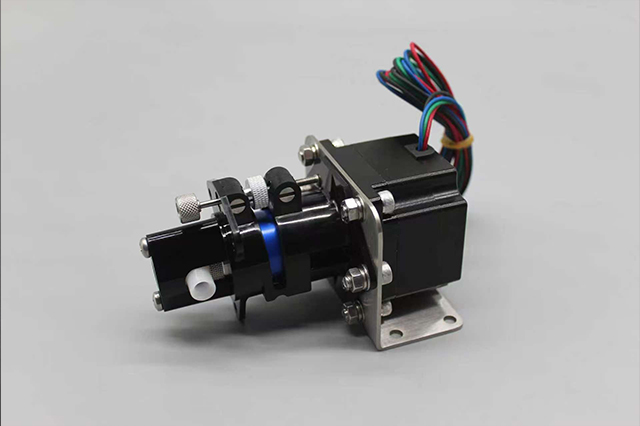
The mechanical brilliance of these units lies in their elegant simplicity. By stripping away complex internal moving parts, engineers have created a system that is simultaneously highly accurate and remarkably durable.
The core pumping action is driven by a single moving part. Within the precisely machined cylinder, the piston performs two distinct motions simultaneously. It rotates on its axis while concurrently moving back and forth in a linear stroke.
To visualize this dynamic process, imagine a synchronized swimming routine where the athlete spins while moving forward and backward. The rotational movement is driven directly by the motor shaft. Meanwhile, the reciprocating linear movement is generated by an adjustable mechanical linkage. The exact combination of these two synchronized movements dictates the precise volumetric displacement per cycle.
Traditional plunger pumps rely heavily on mechanical check valves to ensure fluid moves in only one direction. Unfortunately, ball-and-seat designs are notorious points of failure. They easily become clogged by suspended particulates or stick open due to viscous fluids.
By implementing a valveless micro ceramic metering pump, system designers bypass these issues entirely. The piston features a strategic, precision-ground flat cutout at its working end. As the piston rotates, this cutout acts as its own directional valve. During the intake phase, the cutout aligns with the inlet port while pulling back. This draws fluid into the chamber. As rotation continues, the inlet is sealed against the tight-fitting cylinder wall. Finally, the cutout aligns with the outlet port while pushing forward to dispense the liquid. This seamless architecture prevents clogging and ensures uninterrupted fluid delivery.
System integrators must understand the specific components of a dosing unit to properly evaluate its total value on the production line.
The head assembly consists primarily of the piston and the cylinder liner. The defining characteristic of this assembly is the extreme manufacturing clearance. The gap between the piston and the cylinder is typically ground to a tolerance of just 2 to 3 microns.
Due to this microscopic clearance, backward fluid leakage becomes mechanically impossible. The liquid itself acts as a hydrodynamic seal and a natural lubricant between the two polished surfaces. Consequently, this eliminates the need for internal elastomeric O-rings within the pumping zone. It removes a common source of chemical degradation and particulate shedding.
The mechanical accuracy of the pump head must be matched by the precision of its drive unit. Most high-end systems utilize high-resolution stepper motors. A standard stepper motor divides a full rotation into hundreds of distinct steps. By sending specific electrical pulses, the controller commands the motor to turn an exact number of degrees.
While the internal pumping chamber does not require dynamic seals, the rear of the unit must be adequately protected. Advanced units utilize sophisticated dual-seal technologies. A primary seal contains the process fluid, while a secondary seal creates a protective buffer zone. This wash gland can be continuously flushed with water. If the pump handles fluids that crystallize upon contact with air, the wash gland prevents abrasive crystals from forming on the rear of the piston.
The seamless integration of advanced electronics transforms a purely mechanical device into an intelligent dosing ecosystem. Engineers rely on several control methodologies to achieve nanoliter accuracy.
The most direct method of controlling the flow rate involves adjusting the electrical signals sent to the stepper motor. The motor driver receives a pulse train from the main controller. The total pulse count determines the overall volume dispensed, while the pulse frequency dictates the speed of the flow.
In large-scale industrial environments, pumps rarely operate in isolation. They are integrated into broader factory automation frameworks using Programmable Logic Controllers. High-quality units support standard industrial communication protocols such as RS485 or Modbus RTU. This robust connectivity allows a central controller to monitor status in real-time and adjust dosing rates dynamically based on downstream sensor feedback.
Looking at the broader landscape of fluid control, recent industry analyses reveal a decisive shift toward smart, closed-loop management. Manufacturing facilities are rapidly moving away from manual, static calibration. Instead, the current trend heavily favors IoT-enabled controllers that utilize real-time sensor feedback to dynamically adjust pump strokes on the fly.
This evolution is particularly evident in gigafactories and semiconductor foundries. The demand for extreme miniaturization and zero-defect manufacturing has forced out older pneumatic diaphragm technologies. Contemporary dosing units are now intelligent nodes within an Industry 4.0 ecosystem. This continuous data exchange significantly curtails human error and minimizes expensive material waste.
Choosing the right equipment requires moving beyond basic specifications. To ensure seamless integration, engineers should evaluate systems against a strict operational checklist.
Define Volumetric Requirements: Determine your minimum and maximum dispense volumes per stroke. Look for units that offer adjustable mechanical stroke lengths via a precision micrometer dial for baseline tuning.
Assess Fluid Characteristics: Identify the viscosity and particulate size of your medium. Valveless designs excel with high-viscosity pastes and abrasive slurries up to thousands of centipoise.
Verify Chemical Compatibility: Ensure the wetted materials match your process fluid. High-purity alumina is generally universally resistant, but specific harsh alkalis might require specialized zirconia blends.
Match the Communication Protocol: If integrating into an automated line, verify that the pump's drive controller supports your existing PLC network, whether that is RS485, CANopen, or EtherCAT.
By applying these criteria, upgrading to a precision micro ceramic dosing pump becomes a calculated, risk-free engineering decision rather than a trial-and-error experiment.
When evaluating fluid transfer equipment, bottom-of-funnel decision-makers must look beyond initial procurement costs and rigorously analyze empirical performance metrics over time.
In fluid dynamics, the Coefficient of Variation measures the repeatability of a dosing pump. A lower percentage indicates higher precision. While standard diaphragm pumps struggle to maintain a 2% to 5% variance over time due to membrane fatigue, ceramic metering pumps consistently achieve a variance of less than 0.5%.
Because the rigid components do not wear down or change shape, this ultra-high accuracy remains perfectly stable over tens of millions of operational cycles. This ensures strict quality control across massive production batches.
The initial capital expenditure for a specialized system is generally higher than that of a standard plastic pump. However, the Total Cost of Ownership tells a vastly different story. Calculations must factor in maintenance labor, replacement parts, and the devastating cost of production downtime.
Because these units operate without internal check valves that require constant replacement, maintenance intervals are drastically extended. The complete elimination of unplanned downtime and ruined product batches yields a remarkably rapid return on investment.
To maximize the lifespan and efficiency of these systems, operators must adhere to strict operational guidelines and understand basic diagnostic procedures.
Proper startup routines are essential. Before initiating high-speed operation, the pump must be properly primed to remove all atmospheric air from the fluid lines. Run the unit at a low pulse frequency until a steady, bubble-free stream is observed at the discharge port. Although these pumps handle particulates better than valve types, installing a mesh strainer at the inlet line prevents oversized debris from entering the micron-clearance pump head.
Routine flushing is equally critical. If pumping fluids that crystallize or evaporate quickly, flush the system with a compatible solvent or deionized water immediately after the production run. Never allow crystallizing fluids to dry inside the cylinder, as this will cause mechanical binding upon restart.
Optimizing modern industrial fluid systems requires robust, reliable hardware. The combination of technical materials and a valveless, synchronized rotating and reciprocating mechanism provides a level of volumetric accuracy that traditional equipment simply cannot replicate.
By integrating high-resolution stepper motors and PLC automation, these systems offer engineers absolute control over demanding applications. The superior material properties and intelligent design make it an unbeatable, low-maintenance choice for high-precision fluid management.
If your facility struggles with fluid contamination, frequent maintenance, or inaccurate dosing, it is time to upgrade your fluid control architecture. Evaluate your specific flow requirements and explore the technical specifications of a Micro Ceramic Metering Pump today to secure your production line's long-term reliability.
A micro ceramic metering pump utilizes a rigid, precision-machined piston operating within a valveless cylinder. This rotating and reciprocating motion draws and dispenses fluid with absolute mechanical certainty. In contrast, a standard diaphragm pump uses a flexible membrane and mechanical check valves. Diaphragms stretch and fatigue over time. Check valves are prone to clogging or sticking, leading to inconsistent flow rates and pressure pulsations.
Yes, they are exceptionally well-suited for these challenging fluids. The extreme hardness of industrial ceramics prevents the abrasive particles found in slurries and pastes from scoring the pump internals. Because there are no check valves to clog, highly viscous fluids can pass through the strategic cutouts of the rotating piston head smoothly.
Flow rate adjustments can be made through two distinct methods. Mechanically, the operator can change the mounting angle of the pump head via a micrometer dial. Increasing the angle lengthens the piston stroke, thereby increasing the volume displaced per cycle. Electronically, the flow rate is controlled by adjusting the pulse frequency sent to the stepper motor via a controller.
No external lubrication is required for the internal pumping mechanism. The manufacturing tolerances between the piston and the cylinder are incredibly tight, often measured in just 2 to 3 microns. Because of this precision fit and the naturally smooth surface finish, the process fluid itself acts as the hydrodynamic lubricant. This eliminates the need for oils or greases.
When operated within specified parameters and maintained correctly, the core components possess an extraordinarily long operational lifespan. They can easily exceed tens of millions of cycles with virtually zero measurable wear. The ceramic head itself significantly outlasts traditional stainless steel or plastic alternatives.
While standard pumps struggle above 1,000 centipoise, valveless ceramic pumps can easily handle highly viscous fluids ranging from 50,000 to 100,000 centipoise depending on the specific model and motor torque. This makes them ideal for dispensing thick battery pastes, optical resins, and heavy cosmetic creams.
Maintenance is incredibly straightforward compared to traditional pumps. Because there are no internal valves or O-rings in the fluid path, operators typically perform a Clean-In-Place procedure by running a compatible solvent, warm water, or a mild detergent through the system. For deep cleaning, the pump head can be easily detached, and the ceramic components wiped down with a lint-free cloth and isopropyl alcohol.


