

close
Choose Your Site
Global
Social Media

Views: 0 Author: Site Editor Publish Time: 2026-11-06 Origin: Site


Industrial fluid management frequently encounters a stubborn bottleneck. Equipment degrades rapidly. Traditional metal pumps struggle in harsh chemical environments. Relentless high-pressure conditions tear them apart. They inevitably suffer from frequent breakdowns, severe internal corrosion, and mounting maintenance costs. Facility managers and mechanical engineers constantly evaluate more resilient materials just to keep production lines moving.
Advanced ceramic pumps offer a highly effective alternative. Specifically, the ceramic plunger pump has emerged as the ultimate solution for applications demanding uncompromising durability, volumetric precision, and absolute chemical resistance. These fluid transfer systems leverage the unique properties of technical ceramics. They effectively neutralize the wear and tear issues that plague standard metal and engineered plastic alternatives.
This comprehensive guide walks you through the underlying mechanics, core industrial benefits, common applications, and expert purchase tips associated with this technology. Our goal is to equip professionals with the knowledge needed to choose the perfect standard unit or specialized fluid metering system for their specific operational requirements.
Whether you are a procurement manager looking to reduce total cost of ownership or an engineer tasked with upgrading a failing dosing line, read on. Discover how upgrading to ceramic technology can fundamentally optimize your fluid control infrastructure.
Exceptional Durability: Ceramic pumps demonstrate superior resistance to abrasion, mechanical wear, and extreme operational temperatures when directly compared to conventional metal or polymer-based pumping systems.
Chemical Inertness: The inherently non-reactive properties of ceramic plungers make them highly suitable for handling corrosive acids, caustic alkalis, and aggressive industrial solvents without experiencing material degradation over time.
Pinpoint Accuracy: Specialized ceramic dosing systems provide ultra-precise fluid metering. This remains a critical regulatory and operational requirement for industries such as pharmaceuticals, water treatment, and food processing.
Long-Term ROI: The initial capital investment for technical ceramics may be higher. However, the significantly extended operational lifespan and vastly reduced maintenance requirements result in a substantially lower Total Cost of Ownership.
Smart Purchasing: Proper equipment selection involves a systematic evaluation of flow rates, pressure ratings, specific ceramic materials, and the manufacturer engineering support capabilities.
The fluid control sector is currently undergoing a massive paradigm shift. Recent market analyses reveal a definitive upward trajectory for technical ceramics in fluid dynamics. Global regulatory frameworks are becoming increasingly stringent. The margin for dosing errors has practically vanished, particularly in pharmaceutical manufacturing and municipal water treatment.
This industry-wide push toward zero-contamination, fully automated smart factories accelerates the phase-out of legacy metal pumps. Engineers are moving away from reactive maintenance. They now favor predictive reliability. Advanced ceramics translate directly into problem-solving applications across these highly regulated sectors. The demand for ultra-precise micro-dispensing has made legacy stainless steel systems obsolete in cutting-edge production facilities.
To fully appreciate the operational advantages of these systems, one must first understand their underlying mechanical architecture. A ceramic plunger pump is a specialized positive displacement pump designed for high-performance fluid transfer. It does not rely on flexible diaphragms or rotating gears that eventually fatigue. Instead, this system utilizes a high-purity, precision-machined ceramic rod that reciprocates within a stationary cylinder to displace fluid.
The operational cycle of these pumps divides into two distinct, continuous phases. During the suction stroke, the ceramic plunger retracts outward. This increases the internal volume of the pump chamber, creating a localized vacuum that draws fluid into the chamber through an inlet check valve. Conversely, during the discharge stroke, the plunger pushes back into the cylinder. This pressurizes the trapped fluid and forces it out through a discharge valve.
The true engineering marvel lies in the microscopic clearance between the ceramic plunger and the inner cylinder walls. Manufacturers achieve ultra-tight tolerances through advanced grinding and polishing techniques. This essentially creates a liquid seal using the pumped fluid itself. It completely eliminates the need for traditional soft seals, elastomeric O-rings, or packing materials that rapidly degrade under continuous friction.
Standard plunger pumps are built for bulk fluid transfer at high pressures. In contrast, a Ceramic Plunger Dosing Pump is a distinct sub-category engineered specifically for micro-dispensing and highly accurate volumetric metering. These dosing variants are frequently integrated into automated production lines. Exact fluid volumes must be dispensed repetitively with near-zero deviation. The rigid, non-deforming nature of the ceramic components ensures that the displacement volume remains mathematically constant, stroke after stroke.
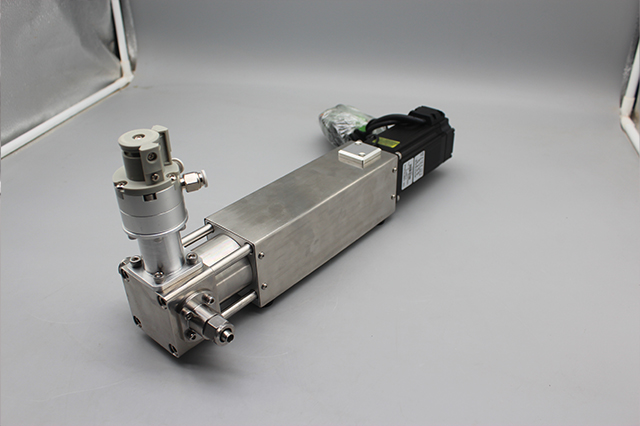
The migration from traditional stainless steel to advanced ceramics is not just a trend. It is driven by empirical data and observable improvements in facility uptime. Engineers managing harsh fluid environments recognize several quantifiable benefits when specifying these materials.
Suspended solids and abrasive slurries act like liquid sandpaper in fluid dynamics. These abrasive fluids rapidly erode internal components when flowing through standard metal pipes and pumps. Industrial ceramics rank exceptionally high on the Mohs scale of mineral hardness, often registering just below diamond. This extreme hardness allows the plunger and cylinder to process crystalline suspensions and particulate-laden liquids effortlessly. They do not suffer the scoring and galling that destroy metal parts.
Corrosion is a leading cause of premature pump failure in the chemical processing industry. Stainless steel relies on a passive oxide layer that chlorides can compromise. Furthermore, ceramic pumps are fundamentally non-metallic and fully oxidized during their high-temperature sintering process. Consequently, they do not rust, oxidize, or react with aggressive chemicals. They remain chemically inert when exposed to concentrated sulfuric acid, sodium hydroxide, and harsh cleaning agents.
Dimensional stability is absolutely non-negotiable for automated dispensing. Metals expand and contract significantly with temperature variations. This alters the internal geometry of the pump chamber and skews the volume of fluid dispensed. Ceramics possess a remarkably low coefficient of thermal expansion. This inherent thermal stability allows the pump to maintain exact dosing volumes over millions of cycles, regardless of temperature fluctuations in the operating environment.
The most compelling argument for facility operators is the drastic reduction in unscheduled downtime. The micro-clearance design eliminates dynamic soft seals. There are simply fewer wearing parts to replace. A system that does not require monthly repacking allows maintenance personnel to focus on other critical infrastructure. Ceramic components have demonstrated operational lifespans five to ten times longer than their metallic counterparts in many documented applications.
The theoretical benefits of advanced ceramics translate directly into problem-solving applications across highly regulated sectors. The demand for precision and reliability drives adoption across multiple industries.
Municipal water treatment facilities and industrial wastewater plants rely on precise chemical dosing to maintain safe water standards. These pumps inject exact, calculated amounts of sodium hypochlorite for disinfection, coagulants for particle settling, and harsh acids for pH balancing. The chemical inertness of the ceramic ensures the equipment survives the very chemicals it meters.
The pharmaceutical industry operates under stringent regulatory frameworks that demand absolute contamination-free processing. Ceramic is inherently sanitary and non-porous. It does not leach metallic ions into the product stream. A highly accurate volumetric metering pump is perfect for dosing active pharmaceutical ingredients, manufacturing vaccines, and filling diagnostic reagents. They easily withstand the high temperatures and caustic chemicals used in standard clean-in-place protocols.
Equipment must handle highly viscous fluids in food and cosmetic production while strictly adhering to hygiene standards. Ceramic pumps easily manage heavy creams, flavored syrups, essential oils, and dense lotions without the slippage common in diaphragm pumps. The smooth, polished surface of the ceramic prevents bacterial adhesion. This ensures the final product remains safe for consumers.
The extraction and refinement of petrochemicals involve extreme pressures and highly abrasive fluids. Drilling muds laden with sand destroy standard equipment. Ceramic pumps play a vital role in these high-pressure environments. They safely dose corrosion inhibitors into the production stream over long durations and prevent hydrate formation in pipelines.
Buyers must justify the capital expenditure of an upgrade when reaching the decision-making stage. A direct, objective comparison between traditional stainless steel and advanced industrial ceramics highlights exactly where the long-term value lies.
One must look at empirical material properties to understand the operational differences. Stainless steel offers high tensile strength but falls short in hardness and chemical inertness. Ceramics sacrifice some impact resistance to achieve extreme hardness and chemical stability.
Material Property | 316L Stainless Steel | Advanced Technical Ceramic |
|---|---|---|
Wear Resistance | Moderate (Susceptible to scoring) | Excellent (Highly scratch-resistant) |
Chemical Inertness | Good (Vulnerable to certain acids) | Superior (Non-reactive to most chemicals) |
Thermal Expansion | Moderate (Expands under heat) | Very Low (Maintains dimensional stability) |
Impact Tolerance | High (Ductile, absorbs shock) | Low (Brittle under direct blunt force) |
Maintenance Frequency | High (Requires frequent seal changes) | Low (Seal-less designs reduce upkeep) |
A stainless steel pump is generally less expensive to purchase upfront. Metal pumps remain a viable choice for a facility with a limited immediate budget and non-corrosive fluid applications. However, the math shifts dramatically when calculating the Total Cost of Ownership for harsh environments. Ceramic pumps win in the long run through zero corrosion degradation and the elimination of consumable dynamic seals. They minimize unscheduled production halts, often paying for their higher initial cost within the first year of operation.
Selecting the right equipment is not a one-size-fits-all process. Evaluating product specifications against facility requirements requires a systematic approach. Here is an essential buyer checklist.
The first step is matching the pump hydraulic specifications to the piping system requirements. Buyers must calculate the required maximum and minimum flow rates. High-end specialized ceramic dosing equipment can achieve micro-dispensing volumes as low as 0.1ml per stroke with a precision margin of plus or minus 0.5 percent. The maximum discharge pressure must overcome system backpressure. Specifying a pump with insufficient pressure capabilities inevitably leads to inaccurate dosing and potential motor overload.
Not all ceramics are identical. Choosing the right base material is critical for operational success. Aluminum oxide is highly cost-effective. It offers extreme hardness and excellent chemical resistance for general abrasive applications. Specifically, zirconium oxide is slightly less hard but offers significantly higher fracture toughness. This makes zirconium oxide less brittle and more resistant to mechanical shocks, which is preferred in ultra-high-pressure applications.
Modern manufacturing relies heavily on automation. Seamless communication is vital when integrating a dosing pump into an existing programmable logic controller system. Look for features such as variable frequency drives or stepper motors that allow for digital control of the stroke rate. The ability to accept standard industrial communication protocols ensures the automated dosing line can adjust flow rates in real-time based on sensor feedback.
The quality of a ceramic pump is intrinsically linked to the machining capabilities of its manufacturer. Ceramic is notoriously difficult to machine once sintered. Precision manufacturing is paramount. Here is how to vet suppliers effectively.
A reputable manufacturer should act as an engineering partner rather than just a vendor. Look for suppliers who offer comprehensive customization support. This includes the ability to calculate and produce custom plunger sizes, specialized stroke lengths, and bespoke housing materials to match the exact chemical makeup of your fluid.
Documented quality control is non-negotiable in industrial procurement. Ensure the manufacturer adheres to recognized international standards. Verify that the manufacturer can provide compliance certificates or sanitary standards documentation to satisfy your internal compliance audits if the pump is intended for food or pharmaceutical applications.
Industrial equipment represents a long-term investment. Robust after-sales support acts as a critical safety net. Clarify the terms of the warranty before issuing a purchase order. Investigate the availability and lead times of replacement parts. Check if the manufacturer offers maintenance training for facility personnel alongside responsive technical support.
Ceramic pumps are exceptionally resilient, but they are not entirely maintenance-free. Implementing a structured care routine protects the capital investment and maximizes equipment longevity.
Facility operators should establish a strict weekly and monthly inspection protocol. Technicians must monitor for micro-leaks around the pump head. They should check the motor alignment to prevent uneven lateral stress on the ceramic plunger. Listening for unusual operational noises is also crucial. It might indicate fluid cavitation or premature bearing wear in the drive mechanism.
A critical warning for maintenance teams: industrial ceramics are incredibly hard, but they can be brittle under sudden, blunt impact. Never strike a ceramic plunger with a metal wrench or hammer during disassembly. Instead, use rubber mallets and specialized extraction tools. Utilize standard clean-in-place procedures for cleaning. Ceramics comfortably withstand aggressive cleaning chemicals and high-temperature steam without losing structural integrity.
Upgrading to a ceramic plunger pump fundamentally transforms industrial fluid systems. These advanced units offer an unparalleled blend of extreme durability, total chemical resistance, and exact dosing precision that traditional metal pumps simply cannot match.
The initial purchasing process requires a careful evaluation of hydraulic specifications, material types, and manufacturer capabilities. The long-term operational peace of mind is well worth the effort. The drastic reduction in maintenance labor and replacement part costs ensures a rapid return on investment.
We encourage facility managers and engineers to assess their current pumping systems to identify recurring failure points. Consult with a specialized manufacturer today. Request a custom quote for a Ceramic Plunger Dosing Pump from HR Fluid to optimize your production line, eliminate downtime, and secure your fluid handling infrastructure for the future. Visit HR Fluid to explore precision-engineered solutions tailored to your toughest industrial challenges.
Industrial advanced ceramics are specifically engineered for high fracture toughness. They will not break under normal, high-pressure operating conditions. Technicians must ensure they are protected from direct, blunt impacts during manual maintenance and disassembly procedures. Dropping them or striking them with metal tools can cause fractures.
Diaphragm pumps utilize a flexible membrane to move fluid. This membrane often suffers from material fatigue, stretching, and pulsing flows over time. A ceramic plunger dosing pump uses a rigid, non-flexible ceramic rod. This precise design offers much higher volumetric accuracy, smoother fluid flow, and zero risk of a flexible membrane rupturing and contaminating the process fluid.
Yes, they are highly capable of handling thick materials. Ceramic plunger pumps are excellent at dispensing highly viscous fluids, depending on the specific valve design and the operational stroke speed. They manage thick lotions, heavy syrups, and dense oils efficiently without clogging or losing their critical dosing accuracy.
Running a ceramic plunger pump completely dry for extended periods is highly discouraged. The microscopic clearance between the plunger and cylinder relies on the process fluid itself to act as a lubricant and coolant. Dry running generates excessive friction and heat, which can lead to thermal shock and catastrophic failure of the ceramic components. Always ensure the pump is properly primed before operation.
The pressure capabilities depend heavily on the specific model, motor size, and ceramic material used. High-performance industrial ceramic plunger pumps can comfortably handle discharge pressures exceeding 3,000 PSI in specialized applications. Zirconium oxide components are typically selected for these ultra-high-pressure environments due to their superior fracture toughness.
Ceramic plungers can last 5 to 10 times longer than their standard stainless steel equivalents in many harsh industrial applications. These advanced ceramic components can run for millions of cycles with virtually zero measurable wear when paired with proper routine maintenance, correct alignment, and appropriately filtered fluids.


