

close
Choose Your Site
Global
Social Media

Views: 0 Author: Site Editor Publish Time: 2026-09-12 Origin: Site


Valveless ceramic metering pumps provide distinct technical advantages for pharmaceutical micro-dosing at the microliter to milliliter scale. By utilizing high-purity materials and ultra-tight mechanical tolerances, these pumps eliminate metal-ion release, offer exceptional acid and alkali resistance, and maintain running clearances of approximately 2 µm. This article outlines the material properties and mechanical execution of ceramic pumps, supporting technical evaluators and procurement managers in assessing these systems for highly precise, GMP-compliant fluid transfer applications.
Key Takeaways:
Material Purity: Core plungers utilize 99.7% high-purity alumina or zirconia to resist chemical degradation and physical wear.
Contamination Prevention: 100% ceramic wetted parts eliminate the risk of metal-ion release into sensitive pharmaceutical fluids.
Mechanical Precision: A ~2 µm running clearance between the plunger and sleeve ensures volumetric consistency without internal slip.
Regulatory Alignment: The inert, valveless design supports strict GMP cleanliness standards for critical dosing environments.
Pharmaceutical manufacturing requires exact volumetric control and absolute fluid purity. Historically, traditional stainless steel pumps have served as the baseline standard for fluid transfer across the industry. While highly effective for general processing and large-scale manufacturing, stainless steel systems face specific operational boundaries when deployed for critical micro-dosing applications.
The primary challenge in microliter-scale pharmaceutical dosing is the risk of metal-ion contamination. Many active pharmaceutical ingredients (APIs), complex biological fluids, and diagnostic reagents are highly sensitive to trace metals. When aggressive chemicals interact with metal wetted parts, microscopic ion shedding can occur. This trace contamination has the potential to alter the efficacy, stability, or shelf-life of the final drug product.
Furthermore, pharmaceutical production frequently involves harsh acids, strong alkalis, and high-temperature steam during clean-in-place (CIP) or sterilize-in-place (SIP) cycles. Repeated exposure to these corrosive agents and thermal shocks accelerates wear on metallic components. As the internal surfaces of a traditional pump degrade over time, the mechanical clearances inevitably widen. In micro-dosing scenarios, even microscopic wear introduces internal slip—where fluid bypasses the pumping mechanism during the pressure stroke. This internal leakage immediately compromises volumetric accuracy. Resolving these chemical and contamination vulnerabilities requires a shift toward materials that remain completely inert and structurally stable under aggressive operational conditions.
To address the chemical degradation vulnerabilities inherent in metallic fluid paths, advanced dosing systems utilize specialized technical ceramics. The core plungers in these systems are manufactured using 99.7% high-purity alumina or zirconia, providing a foundational material solution to the challenges of pharmaceutical fluid transfer.
Alumina (aluminum oxide) and zirconia (zirconium dioxide) are engineered ceramics characterized by their extreme density and chemical inertness. Unlike metals, which rely on a passive oxide layer for corrosion resistance, high-purity ceramics are inherently stable at a molecular level. They do not react with aggressive pharmaceutical acids, strong alkalis, or complex organic solvents. This absolute chemical resistance ensures that the material structure remains intact regardless of the specific fluid being processed or the harsh cleaning agents applied between production batches.
Beyond chemical stability, 99.7% high-purity alumina and zirconia possess exceptional mechanical hardness and wear resistance. In a continuous dosing environment, the friction generated by thousands of repetitive strokes typically causes surface degradation in softer materials. The extreme hardness of these technical ceramics drastically reduces abrasive wear, ensuring the physical dimensions of the plunger remain static over extended production runs.
This structural permanence is not merely a durability benefit; it is the fundamental prerequisite for high-precision fluid control. The ability of alumina and zirconia to resist both chemical attack and physical abrasion enables manufacturers to machine these components to ultra-tight tolerances, directly facilitating the mechanical precision required for micro-dosing.
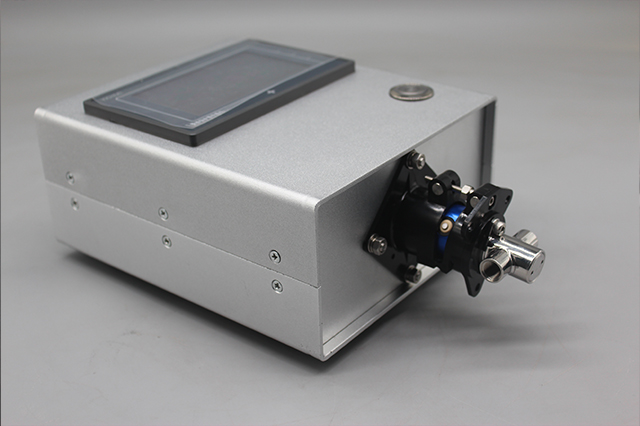
The material properties of high-purity ceramics are fully realized through specialized mechanical execution. A Ceramic Valveless Metering Pump leverages the hardness of alumina and zirconia to achieve internal tolerances that are impossible to maintain reliably with softer materials over long periods.
In H&R FLUID systems, the running clearance between the ceramic plunger and the sleeve is maintained at approximately 2 µm. This ultra-tight clearance acts as a dynamic mechanical seal. Because the gap is so narrow, the fluid's own viscosity prevents it from slipping backward during the dispensing stroke. This precision eliminates the need for dynamic polymer seals, O-rings, or internal check valves, which are common failure points and sources of particulate shedding in traditional pumping mechanisms.
By utilizing a valveless design where all wetted parts are ceramic, these pumps completely eliminate metal-ion release. The fluid path contains no metallic components, ensuring that sensitive pharmaceutical formulations remain uncontaminated from the fluid reservoir to the dispensing nozzle. The absence of internal valves and dead legs also means the pump is highly cleanable. Fluids flow smoothly through the system without pooling in crevices, directly complying with the GMP cleanliness standards required in pharmaceutical manufacturing facilities.
The combination of 2 µm clearances and wear-resistant materials significantly extends the operational lifecycle of the dosing unit, though evaluators must contextualize lifecycle claims.
Important limitation:
Manufacturer testing by H&R FLUID indicates that the pump can run continuously and stably for over 60 million cycles without maintenance.
This 60 million cycle lifespan is a self-reported, theoretical metric based on internal manufacturer testing.
It is not a third-party certified guarantee, and actual real-world maintenance intervals will vary depending on specific fluid properties, operating pressures, and environmental conditions.
The technical precision enabled by 2 µm clearances and valveless architecture dictates the specific operational scope of these systems. They are engineered specifically for microliter to milliliter scale filling, where volumetric consistency is the most critical performance metric for production success.
A Micro Ceramic Metering Pump provides a highly controlled single-cycle filling range of 0–2.5 mL. This specific volume bracket is essential for high-value pharmaceutical applications, including the filling of vials, ampoules, pre-filled syringes, and diagnostic reagents on high-speed automated production lines.
In these automated scenarios, a deviation of even a fraction of a microliter can result in rejected batches, regulatory non-compliance, or compromised patient safety. The valveless ceramic mechanism ensures that every rotation of the pump delivers an exact, repeatable volume within the 0–2.5 mL range, unaffected by minor fluctuations in fluid viscosity or inlet pressure. Because the ceramic components do not expand or contract significantly under standard temperature variations, the dosing volume remains stable throughout long production shifts and sterilization cycles.
Procurement managers evaluating dosing equipment for this specific volume range must prioritize systems that maintain their internal geometry. The application of ceramic pumps in this 0–2.5 mL bracket ensures that the initial calibration holds true across the production run, minimizing the need for constant in-process adjustments, reducing product waste, and ensuring the integrity of the final pharmaceutical product.
These pumps prevent contamination by utilizing 100% ceramic wetted parts. Because the fluid path is constructed entirely from inert materials like high-purity alumina or zirconia, there are no metallic surfaces exposed to the pharmaceutical product. This complete removal of metal from the wetted zone guarantees the elimination of metal-ion release, protecting sensitive APIs and biological fluids from trace degradation.
Compliance with GMP cleanliness standards is supported by the pump's material purity and mechanical design. The 99.7% high-purity ceramic is non-shedding and highly resistant to the harsh chemicals used in CIP and SIP processes. Additionally, the valveless architecture removes internal check valves and complex geometries where bacteria or cross-contamination typically harbor, ensuring the fluid path can be thoroughly and reliably sanitized between batches.
A running clearance of approximately 2 µm acts as a precise mechanical seal without the need for degradable polymer O-rings. This ultra-tight tolerance prevents internal fluid slip—where liquid bypasses the plunger during the dispensing stroke. By eliminating slip, the pump ensures that the exact swept volume of the plunger translates directly into the dispensed dose, maintaining strict volumetric consistency across microliter to milliliter applications.
H&R FLUID reports that their ceramic pumps can run continuously and stably for over 60 million cycles without maintenance. However, evaluators must note that this is a theoretical, self-reported metric based on internal testing rather than a third-party certification. Real-world maintenance schedules will depend heavily on the specific pharmaceutical fluid being pumped, the operating environment, and the frequency and aggressiveness of the cleaning protocols applied.
Next Steps for Technical Evaluators For technical evaluators and procurement managers finalizing dosing system specifications, verifying chemical compatibility and exact volume requirements is the critical next step. Consult H&R FLUID to request a scenario assessment and receive configuration advice tailored to your specific pharmaceutical micro-dosing applications and regulatory requirements.


